
Biblical Principles for AI: Helping Young Adults


Helping Young Adults Follow Jesus in a Digital World
It is not difficult to imagine the scene. A pastor stands in the church fellowship hall at the end of the school year, congratulating seniors, praying over college plans, and celebrating all the ordinary grace that comes with graduation season. Then a student says something that makes the room feel different. He is moving away for college, but he is not worried about being alone because his AI girlfriend will always be there.
That sentence sounds strange at first, but it is not disconnected from the world young adults already inhabit. They use artificial intelligence to organize assignments, write first drafts, answer questions, shape conversations, edit photos, process emotions, and sometimes simulate companionship. The church should not respond with panic, but neither should we respond with silence. When a tool begins to shape identity, intimacy, wisdom, work, and friendship, pastors and leaders must ask what kind of formation is happening.
This is where the church has an opportunity to lead with conviction and compassion. Young adults do not need a church that mocks technology or baptizes every new tool as progress. They need spiritual mothers and fathers, pastors, mentors, small-group leaders, and friends who can help them follow Jesus in a world where artificial intelligence is becoming commonplace. The issue is not only whether AI can help someone finish a task. The deeper question is whether young adults are being formed by a tool or conformed to Christ. Scripture calls believers not to be conformed to this age, but to be transformed by the renewal of the mind (Romans 12:2).
AI Is Already Forming Young Adults
Artificial intelligence is not merely a future conversation. It is already part of the everyday discipleship environment of young adults. According to Lifeway Research, as reported by Baptist Press, pastors and churchgoers have mixed views about AI. Many are open to it, but they are also concerned about how it is implemented and how it may influence Christianity. That tension matters because younger churchgoers are among the most likely to say they would value a sermon that applies biblical principles to AI.
Lifeway’s research found that 50 percent of churchgoers ages 18 to 29 and 53 percent of churchgoers ages 30 to 49 would value hearing a sermon that teaches how biblical principles apply to artificial intelligence. That tells pastors something important. Young adults are not simply asking whether the church owns new technology. They are asking whether the church can speak with biblical clarity into the world they already live in.
The local church should treat AI as a discipleship issue because tools are never neutral in the way they shape habits. A hammer does not decide what a builder values, but it can extend the builder’s ability to create or destroy. In the same way, AI can help a young adult study more effectively, organize responsibilities, write with greater clarity, or ask better questions. It can also help someone avoid hard work, hide dishonesty, indulge in fantasy, escape accountability, or treat emotional affirmation as a replacement for real community.
The question is not whether young adults will use AI. Many already are. The better pastoral question is whether the church will help them use AI with wisdom before they are discipled by a machine that cannot love God, cannot love neighbor, and cannot bear the image of God.
AI Is a Tool, Not an Image Bearer
Before churches can help young adults use AI wisely, they need clear language. The National Institute of Standards and Technology defines artificial intelligence as a machine-based system that can make predictions, recommendations, or decisions for human-defined objectives. That definition is helpful because it removes some of the mystery. AI may imitate a conversation, generate an answer, or respond in a way that feels personal, but it is not a person.
This is not a small theological detail. Scripture teaches that human beings are made in the image of God (Genesis 1:27). AI is made by people. People bear God’s image. Technology bears human design. AI can summarize, generate, imitate, calculate, sort, and recommend, but it cannot worship, repent, forgive, covenant, suffer faithfully, or love sacrificially. It may sound human, but it cannot be human.
That distinction gives the church both freedom and guardrails. We do not have to pretend every use of AI is sinful. A pastor may use AI to brainstorm discussion questions, organize a teaching outline, summarize a publicly available resource, or create a list of follow-up questions for leaders. A student may use it to clarify a concept, practice a presentation, or manage a calendar. Those uses can be helpful when they remain tools under moral responsibility.
The danger comes when a tool is treated as a soul. A young adult may begin to turn to AI for spiritual authority, emotional intimacy, confession without accountability, or relational satisfaction without covenant love. The church must say with pastoral clarity that AI can assist a person, but it cannot replace people. It can generate words, but it cannot become a brother or sister in Christ. It can imitate counsel, but it cannot shepherd a soul.
Artificial Intimacy Cannot Replace Biblical Community
The more personal AI becomes, the more important the biblical community becomes. One of the most concerning developments is not that AI can help a student write a paper. It is that AI is now being marketed and experienced as a form of companionship. Search interest around AI girlfriend, AI boyfriend, and AI dating reveals a deeper hunger. People are not only looking for information. Many are looking for presence, affirmation, and relief from loneliness.
This is where churches must avoid careless answers. Young adults are not wrong for wanting connection. They are not weak because they want to be known, wanted, remembered, or loved. God created people for a relationship with Him and with one another. The problem is not a desire for companionship. The problem is when simulated attention is treated as biblical love.
The relational landscape has already changed. Pew Research Center reports that 53 percent of adults under 30 have used a dating site or app. Pew also reports that 42 percent of U.S. adults were unpartnered in 2023, based on Census Bureau data. Meanwhile, the U.S. Census Bureau reported that in 2025, fewer than half of U.S. households were married couple households, and that one-person households made up 29 percent of all households. These numbers do not mean every single adult is lonely, and we should not speak as if singleness is a problem to be solved. But they do remind us that many adults are navigating life outside the assumed structures that churches often build around married couples with children.
That is why this conversation matters for single adults, college students, young professionals, divorced adults, widows, single parents, and young adults who are trying to discern life and relationships. At Table for One Ministries, we often say single adults are not just in your community. They are your community. The church cannot outsource belonging to apps, algorithms, or AI companions. We need real tables, real names, real prayers, real meals, and real friendships.
A Christian view of friendship and marriage must remain grounded in covenant love, not consumer preference. AI may respond immediately, affirm constantly, and adapt to the user’s desires, but biblical love is not built on frictionless affirmation. Jesus calls His people to love one another sacrificially (John 13:34-35). Proverbs teaches that a friend loves at all times (Proverbs 17:17). Biblical friendship is not simply a response that makes me feel seen. It is a relationship where I am known, loved, corrected, encouraged, and called toward Christ.
Relational Discipleship Cannot Be Outsourced
AI can generate content, but discipleship is not merely content delivery. The early church devoted itself to the apostles’ teaching, the fellowship, the breaking of bread, and the prayers (Acts 2:42-47). That picture is deeply personal. They gathered. They shared life. They ate together. They prayed together. They learned together. They were formed in the community as the Spirit of God worked among God's people.
This is where churches must recover confidence in what only the church can do. AI may explain repentance, but it cannot model repentance. AI may summarize Scripture, but it cannot embody patient obedience. AI may generate a devotional paragraph, but it cannot sit across the table and pray a name with tears. AI may simulate affirmation, but it cannot enter covenant fellowship with the body of Christ.
The Baptist Faith and Message 2000 describes a New Testament church as a local congregation of baptized believers associated by covenant in the faith and fellowship of the gospel. That language matters. A church is not first a content platform, an event schedule, or a ministry brand. The church is a covenant people formed by the gospel and sent on mission. Therefore, the discipleship of young adults cannot be outsourced to code, content, or convenience.
This is why biblical community must become more than a slogan. Churches must build relational pathways where young adults are noticed, named, known, loved, corrected, equipped, and sent. Table for One’s work on biblical community and disciple-making among young adults makes this point clear. Young adults are formed when they are placed in relationships where truth and love meet over time. That kind of discipleship cannot be downloaded. It must be lived.
Five Pastoral Practices for Churches Helping Young Adults Use AI
1. Define AI clearly before young adults define it emotionally. Start by teaching what AI is and what it is not. It is a tool, not a soul. It can assist human work, but it cannot replace wisdom, worship, conscience, community, or spiritual authority. Clear language lowers fear and raises discernment.
2. Teach a theology of personhood. Begin with the image of God. Help young adults see that people matter more than efficiency, productivity, and artificial affirmation. The church must help them resist any technology that trains them to value control over covenant, performance over presence, or simulated intimacy over real love.
3. Disciple toward wise use, not fearful avoidance. Young adults do not need leaders who only say no. They need leaders who help them discern when AI is useful and when it becomes formative in unhealthy ways. Give examples of appropriate uses, such as organizing notes, studying concepts, and honestly drafting ideas. Then give examples of misuse, such as academic dishonesty, secret dependence, emotional escape, and spiritual confusion.
4. Talk about AI companionship before it becomes a crisis. Churches should address AI dating, AI girlfriend searches, AI boyfriend searches, and AI companionship with both compassion and conviction. Shame will not shepherd young adults well. Silence will not protect them either. Speak plainly about the difference between digital attention and biblical love.
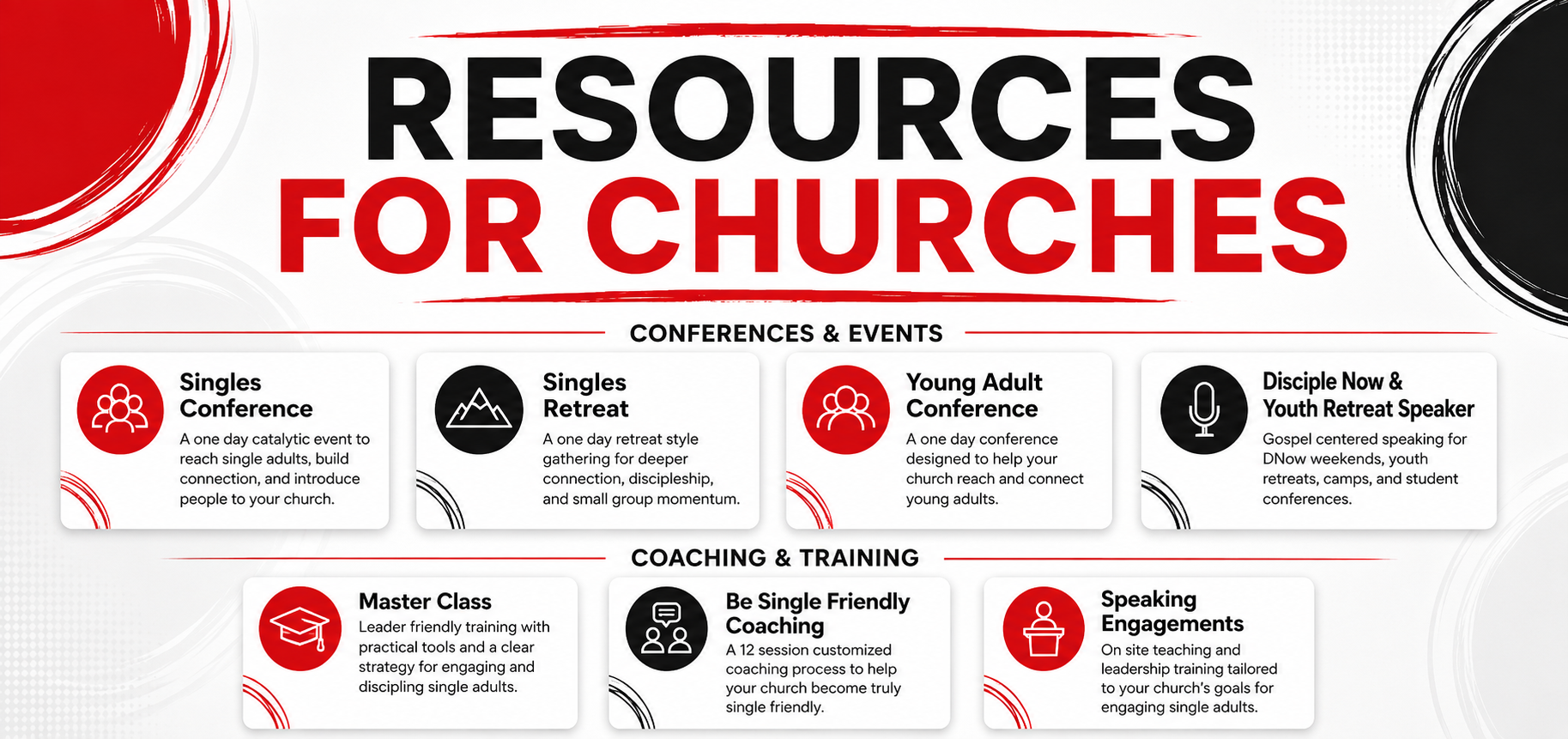
5. Build real relationships before artificial ones feel easier. The strongest response to artificial intimacy is not only a sermon series. It is a church culture where young adults are genuinely known. Churches that want to reach young adults must create clear pathways for meals, mentoring, serving, small groups, intergenerational friendship, and discipleship. Table for One’s resources can help churches build a single, friendly, and young-adult-friendly ministry culture that moves beyond events to real formation.
Churches looking for practical next steps can explore single-adult ministry resources, guidance on helping believers live complete in Christ, and practical help to start a Christian singles ministry that builds community rather than another isolated program.
Young Adults Need More Than Digital Answers
AI will continue to change. The tools will become faster, more personal, more persuasive, and more integrated into daily life. Churches do not need to chase every headline, but they do need to disciple people living in this moment. The question is not whether technology will shape young adults. It already does. The question is whether the church will help young adults follow Jesus with wisdom, honesty, holiness, and real relationships.
The church should not act as though every young adult is looking for an AI companion. Many are not. Many are faithful, thoughtful, and hungry for a faith that speaks clearly to the world they are inheriting. But the presence of AI companionship should wake us up. A generation that can talk to a machine at any hour still needs people who will learn their names, sit at the table, ask good questions, tell the truth, pray with them, and walk beside them.
This is why Table for One Ministries continues to press the church to see single adults and young adults as people to be discipled, not categories to be managed. Young adults are not problems to solve. Single adults are not incomplete people waiting for marriage before ministry matters. In Christ, believers are brought to fullness (Colossians 2:10). Their lives matter now. Their gifts matter now. Their formation matters now.
AI may become part of the future, but the church must keep forming people in the present. We do this by teaching biblical principles, building real community, practicing honest discipleship, and reminding every person that no tool can replace the Savior, no algorithm can replace the body of Christ, and no artificial companion can replace the love of God expressed through His people.
This expanded article references Dr. PJ Dunn’s Lifeway Research article,
How Churches Can Help Young Adults Apply Biblical Principles to AI, originally published June 11, 2026. A Baptist Press repost is also available
here.
FAQ: Biblical Principles for AI, Young Adults, and the Church
What are biblical principles for AI?
Biblical principles for AI begin with the truth that God created people in His image and gave people moral responsibility. AI can be used as a tool, but it should never replace wisdom, worship, honesty, church community, or the authority of Scripture.
How should Christians use AI?
Christians should use AI with wisdom, transparency, and accountability. It can help with organization, study, and communication, but believers should avoid using AI to deceive, plagiarize, escape responsibility, replace relationships, or seek spiritual authority apart from Scripture and the church.
Can AI be used in church ministry?
AI can assist church ministry when it supports people rather than replaces them. It may help organize ideas, generate planning prompts, or summarize public resources, but pastoral care, preaching, discipleship, counseling, and spiritual leadership must remain deeply personal and accountable.
What should pastors teach about AI and young adults?
Pastors should teach that AI is a tool, not an image bearer. Young adults need help discerning helpful use, harmful dependence, digital temptation, artificial intimacy, and the need for real relationships rooted in biblical community.
Is an AI girlfriend or AI boyfriend a real relationship?
An AI girlfriend or AI boyfriend may feel emotionally responsive, but it is not a covenant relationship with a real person. It cannot bear God’s image, love sacrificially, repent, forgive, or grow in holiness. Churches should address this with compassion and clarity.
How can churches respond to AI dating?
Churches can respond to AI dating by teaching a biblical view of personhood, friendship, dating, marriage, and community. Leaders should talk about the topic before a crisis, avoid shame-based language, and help young adults build real relationships.
Why is biblical community important in the age of AI?
Biblical community matters because discipleship happens through real people, not only information. AI may provide answers, but the church provides covenant fellowship, prayer, correction, service, encouragement, and love that point people to Christ.
How can young adults use AI with wisdom?
Young adults can use AI wisely by maintaining human responsibility. They should verify information, disclose help when appropriate, avoid dishonest shortcuts, protect privacy, and make sure AI does not replace prayer, Scripture, church involvement, or real friendships.
What is the difference between AI companionship and Christian friendship?
AI companionship is simulated attention from a tool. Christian friendship is a real relationship between image bearers who can love, forgive, challenge, serve, pray, and walk together in truth. One adapts to preference. The other helps form Christlike maturity.
How can a church build a young adult ministry that disciples people?
A church can build a young adult ministry by creating relational pathways rather than merely events. Young adults need to be noticed, named, known, taught Scripture, connected to small groups, invited to serve, mentored by mature believers, and sent on mission.
Are single adults more affected by digital loneliness?
Not all single adults are lonely, and singleness should not be treated as a deficiency. However, many single adults and young adults navigate life outside traditional household structures, which makes intentional church community and real friendship especially important.
What resources can help churches disciple singles and young adults?
Churches can use Table for One Ministries resources, Bible studies, conferences, coaching, and young adult ministry tools to help single adults live completely in Christ and build meaningful community in the local church.