
Why Your Church Needs a Singles Bible Study That Builds Disciples, Not Just Events

Singles are not a side group
Many churches do not ignore single adults on purpose. They simply build ministry around assumptions. Adult ministry becomes couple focused. Family ministry becomes the main adult pathway. Sermon illustrations assume marriage and parenting. Events are planned around the schedules and budgets of households with two adults. Over time, single adults may still attend, serve, give, and worship, but they are not always discipled with intentionality.
The U.S. Census Bureau reported that in 2025 fewer than half of U.S. households were married couple households, while one person households accounted for 29 percent of all households. The mission field around the local church has changed, and in many communities it has been changing for decades. If the church only knows how to speak to married adults with children, the church will miss a significant part of its community.
Singles are not just in your community; they are your community. That statement should reframe the way churches think about singles ministry. A Christian singles Bible study is not a niche offering for people who do not fit somewhere else. It can be a strategic discipleship environment for adults who are part of the body of Christ and part of the harvest field.
Why events alone are not enough
Events have a place. Meals, game nights, retreats, service projects, and social gatherings can help people build trust and friendship. Many single adults need low pressure spaces to connect. But events alone cannot carry the full weight of discipleship. A calendar can gather people without forming them. A crowd can look successful while people remain spiritually shallow, relationally unknown, and emotionally isolated.
The church must ask better questions than, “How many people came?” We need to ask, “Are people growing in Christ? Are they known by name? Are they praying for one another? Are they learning Scripture? Are they serving the church? Are they becoming more like Jesus? Are they building relationships that strengthen their faith instead of simply filling their weekends?”
A strong singles ministry does not have to choose between community and discipleship. It needs both. Shared meals can open the door. Scripture must shape the room. Prayer must deepen trust. Service must move the group outward. Biblical community is not only people sitting together. It is people being formed together under the lordship of Christ.
What a singles Bible study should form
A singles Bible study should form identity. Single adults need to hear that they are not incomplete because they are unmarried. Their worth is not waiting for a relationship status upgrade. In Christ, they are loved, called, gifted, and sent. That truth must be repeated because the world repeats the opposite in countless ways.
A singles Bible study should form courage. Many singles carry fears about the future, finances, health, aging parents, raising children alone, dating again, or never marrying. Matthew 6:25 to 34 reminds believers to seek first the kingdom of God and trust the Father’s care. A group that opens Scripture around these fears helps people move from private anxiety toward shared prayer and faithful action.
A singles Bible study should form community. Loneliness is not solved by putting people in the same room once a month. Community grows through repeated presence, honest conversation, wise leadership, and mutual care. A group should learn to notice absences, celebrate growth, support grief, encourage service, and make space for testimony.
A singles Bible study should form holiness. Single adults do not need watered down teaching. They need biblical truth applied to real life with grace and courage. Dating, sexuality, bitterness, contentment, comparison, friendship, forgiveness, and purpose should be addressed with pastoral clarity. Galatians 5:22 to 23 gives a vision for the fruit of the Spirit that every believer should reflect.
The group must serve more than one kind of single
One common mistake is treating all singles as young adults who are hoping to marry soon. Some are. Many are not. Single adults include collegiate adults, never married adults, dating singles, engaged singles, divorced singles, single parents, widows and widowers, and others who carry complex stories. A ministry that assumes all singles are the same will miss many of them.
This is why language matters. When a church says “singles,” some people hear dating group. Others hear divorce recovery. Others hear young adults. Others do not think the word applies to them at all. Wise leaders define the group clearly and pastor the people in front of them. A single mother in her forties, a never married man in his thirties, a widow in her sixties, and an engaged couple in their twenties may all be legally single, but they do not all carry the same questions.
A helpful singles Bible study creates enough shared theological foundation to unite the group while giving leaders room to apply the conversation to different life situations. The foundation is not “everyone here wants the same future.” The foundation is “everyone here needs Christ, Scripture, community, and purpose.”
How to launch with clarity and humility
Start with prayer and listening. Before launching a singles Bible study, identify single adults already in your church and ask thoughtful questions. What helps them feel known? Where do they struggle to connect? What topics would serve them? What assumptions have they experienced? What kind of group rhythm would be realistic? Listening communicates dignity before programming begins.
Choose leaders who are spiritually mature, relationally aware, and comfortable shepherding a diverse group. The leader does not have to have every answer, but they must be able to guide discussion, keep Scripture central, protect the room from becoming a dating marketplace, and encourage people toward the larger life of the church.
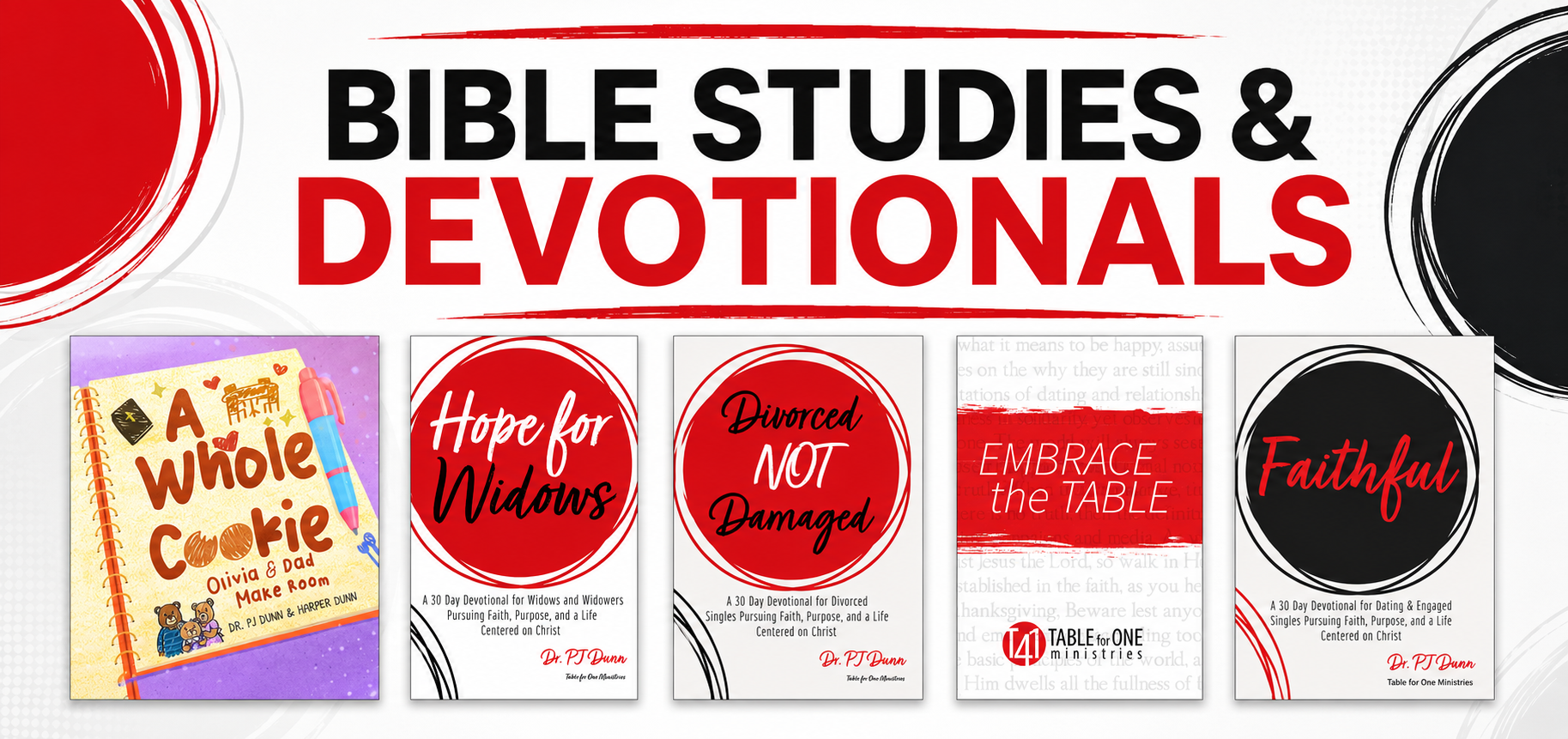
Pick a resource that helps the group talk about real issues without drifting into opinion only. Embrace the Table: Small Group Study for Singles is designed as a six session guide for this kind of environment. Each session includes Scripture, discussion, life application, and prayer. The study addresses marriage not being the finish line, fear and worry, loneliness, biblical examples of singleness, transformation in Christ, and the fruit of the Spirit.
Then communicate the group as discipleship, not desperation. Avoid language that sounds like the church is gathering singles to fix them, pair them off, or keep them busy. Say clearly that the goal is to help single adults grow in Christ, build meaningful community, and serve faithfully in the church and community.
A next step for pastors and leaders
A church does not need a massive budget to begin caring for single adults well. It needs theological clarity, pastoral attention, and a willingness to see people who may have been present but overlooked. Start with one group. Start with six weeks. Start with a table, Scripture, honest questions, and prayer. Do not wait until the plan is perfect to begin shepherding people God has already placed in your care.
If you are ready to begin, Embrace the Table gives your church a practical, biblical starting point. It can help your leaders move beyond assumptions and help single adults move deeper into Christ centered community. The goal is not merely to start a singles ministry. The goal is to make disciples who know they are complete in Christ and who are equipped to live boldly for the kingdom right where they are.
Events may gather people, but discipleship forms them. Build a singles Bible study that does both. Your church will be healthier for it, and single adults in your community may finally hear what they should have heard all along: you are seen, you are needed, and in Christ, you are complete.
Frequently Asked Questions
How do you start a singles Bible study at church?
Start with prayer, listen to single adults, choose mature leaders, select a biblical resource, communicate the purpose clearly, and create a consistent rhythm for Scripture, discussion, application, and prayer.
What is the difference between singles ministry and a singles Bible study?
Singles ministry can include events, care, service, and outreach. A singles Bible study is a discipleship environment where single adults gather around Scripture, prayer, discussion, and life application.
Should singles ministry be only for young adults?
No. Single adults include never married adults, dating singles, engaged singles, divorced singles, single parents, widows, widowers, and adults of many ages. A healthy ministry should recognize that diversity.
What topics should a Christian singles Bible study cover?
It should cover identity in Christ, marriage, contentment, loneliness, worry, biblical community, dating, holiness, service, spiritual gifts, and the fruit of the Spirit.
How often should a singles Bible study meet?
Many groups meet weekly for six to eight weeks when starting. The best rhythm is one that allows consistency, honest conversation, and sustainable leadership.
How can churches avoid making singles ministry feel like a dating group?
Churches can keep Scripture central, define the group around discipleship, set healthy expectations, choose wise leaders, and encourage community that is broader than romantic pursuit.
What is the best small group study for singles?
The best study is one that is biblical, practical, and respectful of the diversity of single adult lives. Embrace the Table is a six session study designed specifically for single adults and church leaders.
Why do churches need single adult ministry?
Churches need single adult ministry because single adults are a significant part of the community and the church. They need discipleship, belonging, pastoral care, leadership opportunities, and biblical community.
Sources and Links Used
· U.S. Census Bureau, 2025 Families and Living Arrangements
· U.S. Surgeon General, Our Epidemic of Loneliness and Isolation
· Table for One Ministries, Singles Resources
· Table for One Ministries, Single Adult Statistics in America
· Lifeway Research, Dating and the Church
· Bible Study Tools, How to Help Your Singles Bible Study Thrive